


Do Clear Aligners Cause a Lisp and How Long Does It Last?
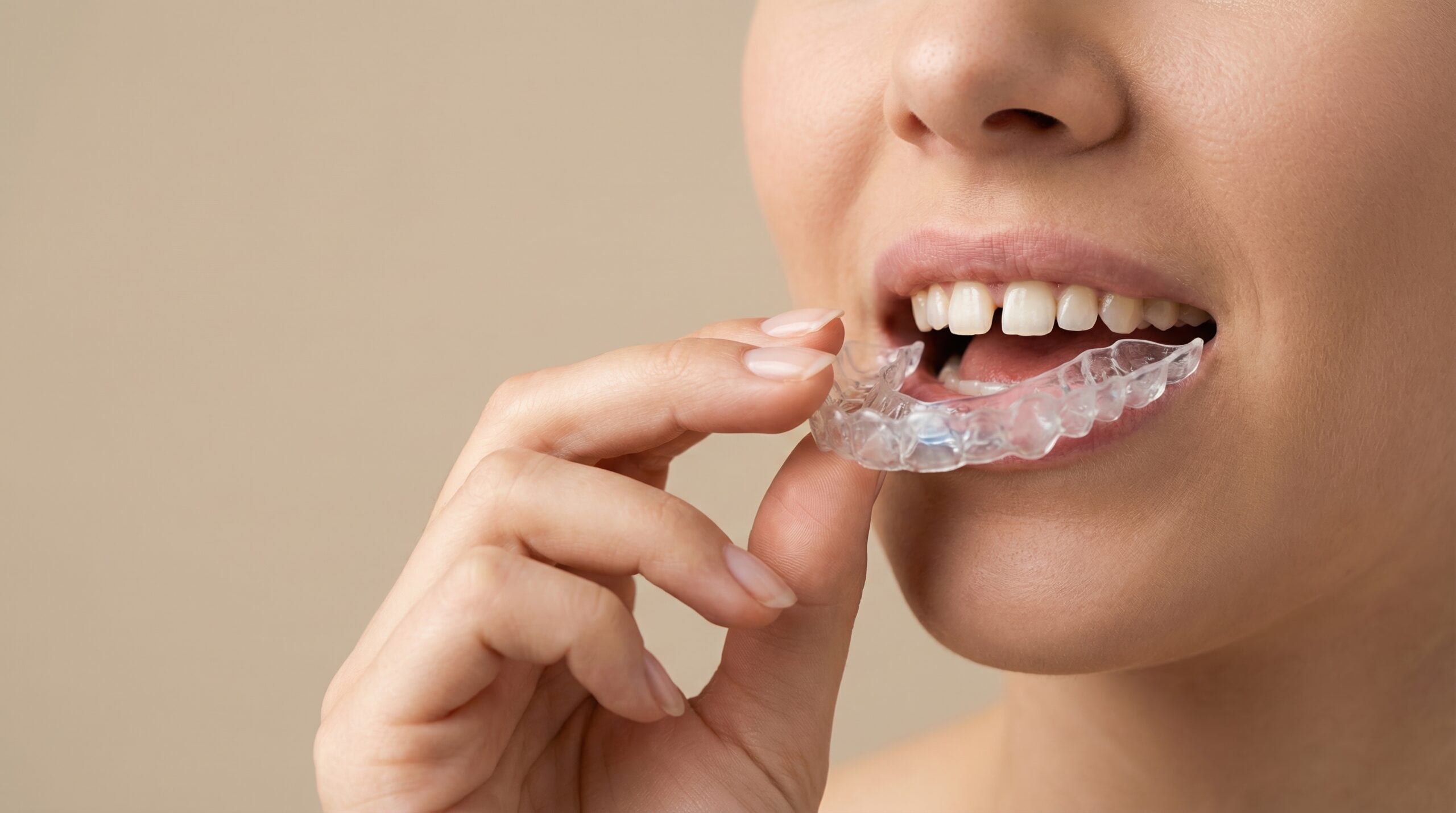
If you’ve been thinking about straightening your teeth with clear aligners, you’ve probably wondered what it actually feels like day to day. One of the most common concerns people have—especially adults who speak frequently for work or social situations—is whether aligners will affect their speech.
More specifically: will you develop a lisp?
It’s a fair question, and the honest answer is that some people do notice a slight change in how they speak at first. The good news is that it’s temporary, manageable, and often much less noticeable than patients expect. Understanding why it happens and how long it lasts can help you feel more confident starting treatment.
Why Clear Aligners Can Affect Speech at First
Clear aligners are designed to fit snugly over your teeth and gently guide them into better alignment. Even though they’re thin and custom-made, they still introduce a new surface inside your mouth. That small change can affect how your tongue moves when forming certain sounds.
Speech depends on very precise coordination between your tongue, teeth, and airflow. Sounds like “s,” “z,” and “sh” are especially sensitive to even minor changes. When aligners are in place, your tongue has to relearn where to land and how to move around them.
Because of that adjustment, some patients notice a slight lisp or softness in certain words during the first few days of wearing aligners. It’s not a sign that anything is wrong—it simply means your mouth is adapting.
How Common Is a Lisp With Aligners?
Not everyone experiences a lisp. Some people put their aligners in and speak normally right away, while others notice a subtle difference in pronunciation.
For those who do experience it, the change is usually mild. In many cases, it’s more noticeable to you than to anyone else. Friends, coworkers, and family members often don’t pick up on it unless it’s pointed out.
Your experience can depend on a few factors:
- How your tongue naturally rests when you speak
- The shape and alignment of your teeth
- Whether your treatment includes attachments or bite adjustments
- How often you speak throughout the day
Even people who rely heavily on speaking—teachers, sales professionals, or public speakers—typically adjust quickly.
How Long Does the Lisp Last?
This is the part most people care about, and thankfully, the timeline is usually short.
For most patients, any speech changes are most noticeable during the first few days and improve quickly as your tongue adapts.
In general:
- Many people adjust within 48–72 hours
- Most notice clear improvement within the first week
- Speech typically returns to normal within one to two weeks
Your brain and tongue are incredibly adaptable. With consistent wear and normal conversation, your speech patterns recalibrate faster than you might expect.
It’s also worth noting that while you’ll switch to new aligners throughout treatment, the lisp usually does not come back in the same way. If you notice anything at all with a new tray, it’s typically very minor and fades quickly.
Why the Adjustment Period Feels Different for Everyone
Even though there are general timelines, your experience may not look exactly like someone else’s—and that’s completely normal.
Some people barely notice any change, while others feel like their speech is off for several days. That variation comes down to how your mouth adapts to the new environment.
You may notice a lisp more if:
- You speak quickly or frequently
- You’re especially aware of how you sound
- Your aligners include additional features like attachments
- You’ve just started treatment
On the flip side, if you’ve worn retainers or other dental appliances in the past, your adjustment period may be even shorter.
Simple Ways to Adjust Faster
While your mouth will naturally adapt over time, there are a few easy things you can do to speed up the process and feel more comfortable sooner.
One of the most effective methods is simply talking more. The more you speak with your aligners in, the faster your tongue learns how to move around them. Reading out loud, having conversations, or even practicing difficult words can make a noticeable difference.
Slowing down your speech slightly in the beginning can also help. This gives your tongue time to adjust and form sounds more accurately.
Consistency is another key factor. Wearing your aligners as directed—typically 20 to 22 hours per day—helps your mouth adapt faster. Taking them in and out too often can actually prolong the adjustment period.
When Should You Be Concerned?
In most cases, a lisp with clear aligners is temporary and resolves on its own. However, if you notice that speech issues persist beyond a couple of weeks or feel unusually pronounced, it’s worth checking in with your orthodontist.
Occasionally, a more noticeable lisp can be linked to the way an aligner fits. A quick adjustment or evaluation can ensure everything is on track.
That said, long-term speech problems from clear aligners are extremely uncommon. The vast majority of patients fully adjust and speak normally throughout treatment.
The Bigger Picture: Confidence During Treatment
It’s easy to focus on small concerns like a temporary lisp, especially if you’re used to speaking clearly and confidently. But most patients find that any initial awkwardness fades quickly and becomes a non-issue.
In fact, many people say they stop thinking about their aligners entirely after the first week. Speaking, eating, and daily routines begin to feel normal again.
And unlike traditional braces, clear aligners offer a more discreet way to improve your smile—something that often boosts confidence during treatment rather than holding it back.
McDonald Orthodontics – Start Your Smile With Confidence
If you’re considering clear aligners and want guidance you can trust, the team at McDonald Orthodontics is here to help. Whether you’re in Salem or Keizer, OR, you’ll receive personalized care designed to make your treatment as smooth and comfortable as possible.
From your first consultation to your final results, they’ll walk you through every step—including what to expect with speech changes and how to adjust quickly.
If you’re searching for a trusted orthodontist in Salem or Keizer, now is the perfect time to take the next step. Schedule a consultation with McDonald Orthodontics and find out if clear aligners are right for you.
